
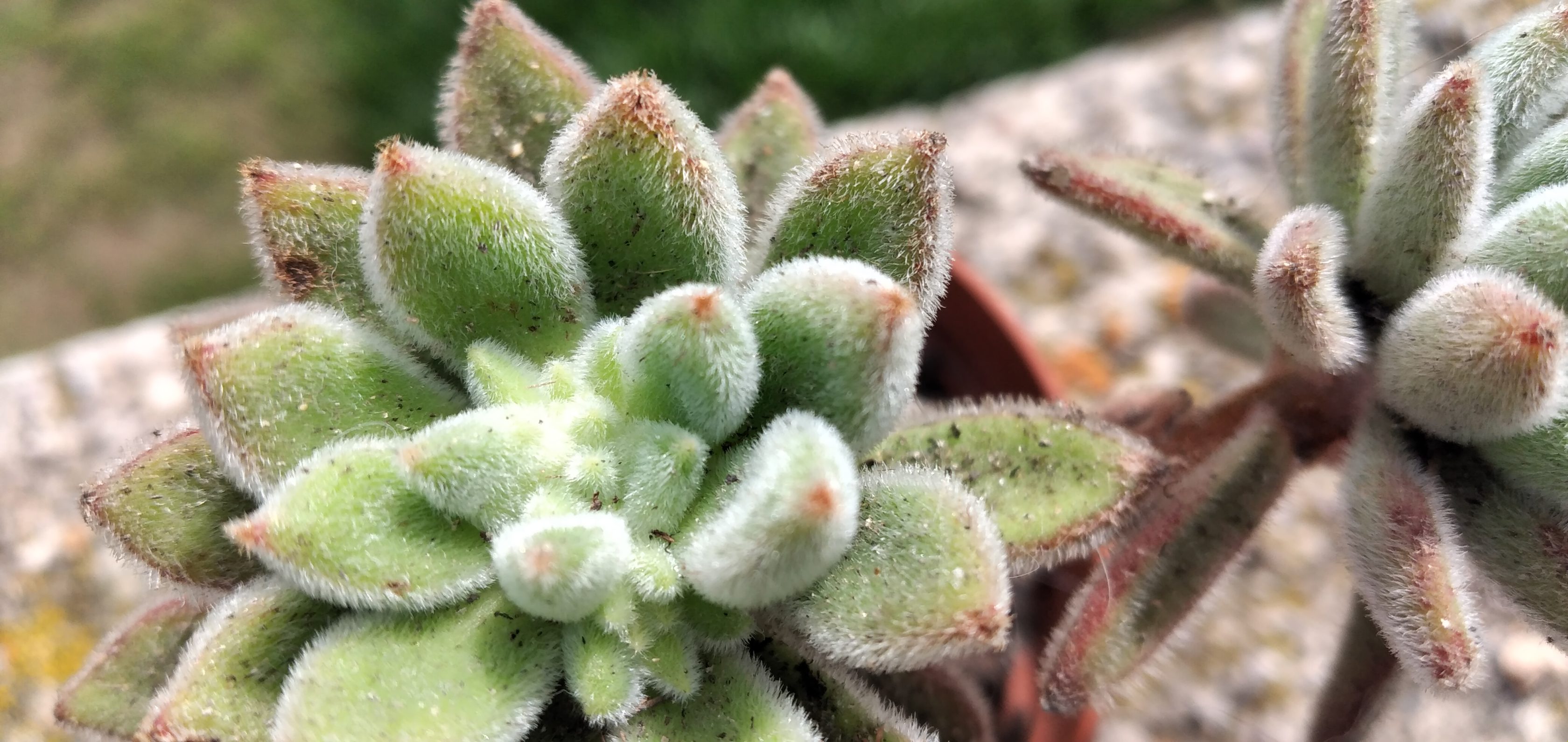
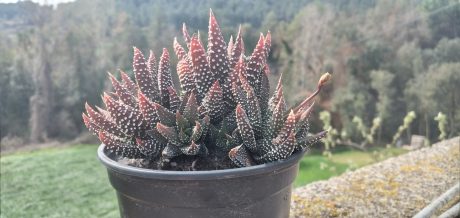
The succulent Echeveria Setosa is among the most famous in the world. It has a characteristic trait that makes it highly prized by collectors. We can see from the naked eye that glowing in the leaves has an incalculable number of hairs that if we look for a similarity to something, it can remind us of a teddy or something very fine that we could spend hours touching, looking at and caressing. It is known by the scientific synonym Echeveria Pilosa or by the common name succulent setosa. It comes from Mexico, more specifically the states of Puebla and Oaxaca.
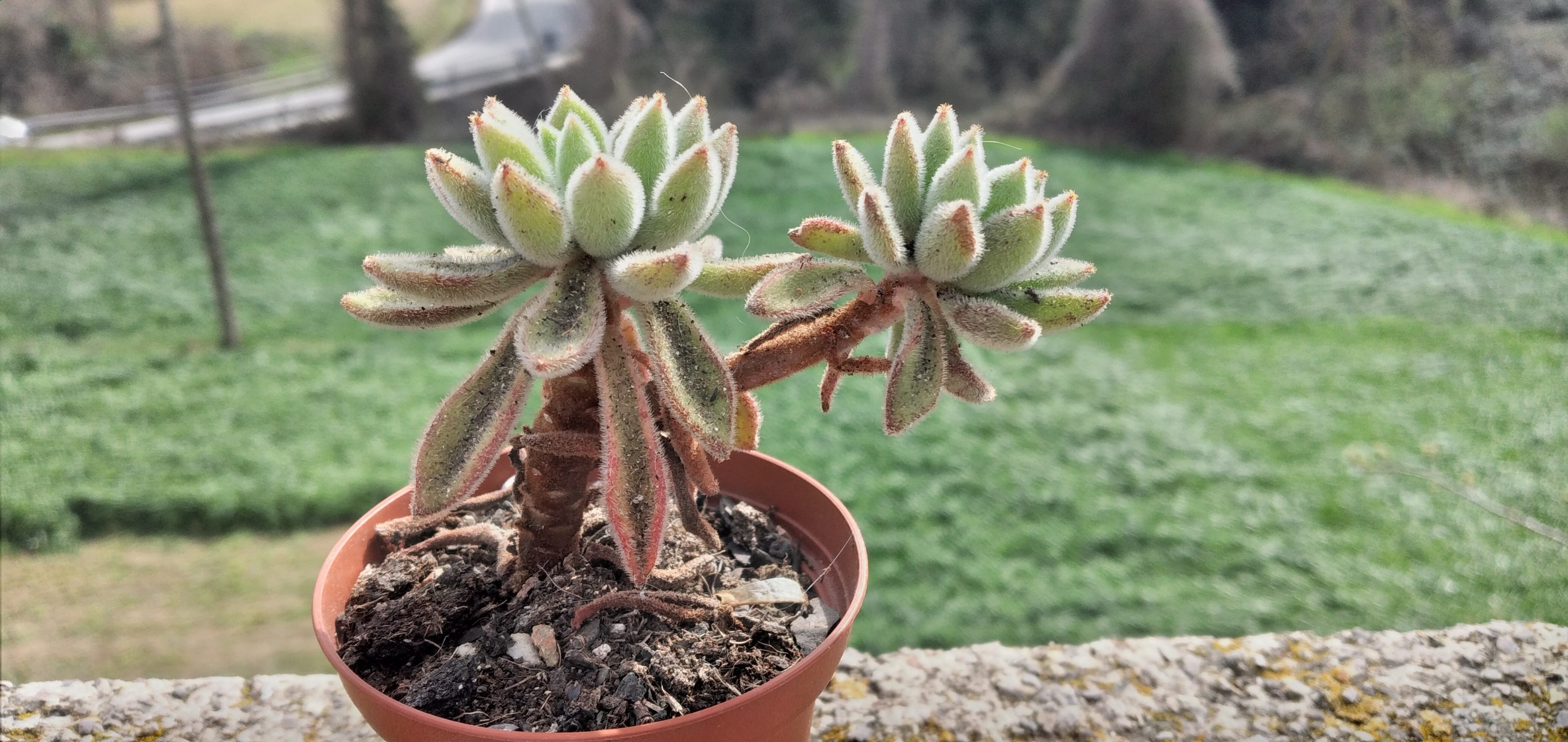
It grows into a rosette of large, fleshy leaves of light green (if you have it in a well-lit place) with brown edges. If, on the other hand, you have it in a place where sunlight does not touch it, that is, it is in half shade, instead of having a light green it will have the leaves of a darker green and the edges will be greyish green. So, I could recommend that you have it in a place where during the morning (up to about twelve o’clock) it touches the direct sun, and then in the afternoon (from twelve o’clock) to avoid possible sunburn and high temperatures you should put it in a place with half shade. A good place, for example, would be an east-facing balcony, where the sun would touch in the early hours, and then as the day rose, it would not need to be touched, as the shadow of the house itself would protect it.
It is not a succulent growing much in height, but rather in width. It will grow quickly, yes, but really, what grows is the rosette, it can be about fifteen centimeters high by twenty widths. Flowering occurs between spring and summer, offering yellow flowers with red at the base and bell-shaped. They sprout from a stem of twenty centimeters and each remove six to nine flowers.
As for irrigation, being a species of the genus Echeveria (they retain a lot of water in the leaves, so they are so fleshy and large) it does not want much water. That’s why I would tell you: every ten days in spring and summer, once a month in autumn and stop irrigating in winter. This frequency could change slightly in autumn if you’re at a place where it’s not too cold. If so, like being at sea level, you could change irrigate once a month for once every fortnight (note that only in autumn and winter need to be at rest). As usual, before irrigating, check that the substrate is completely dry, if you provide water when there is still moisture, all you can do is rot the plant.
To conclude, the ideal temperature at which our succulent should always be is between eighteen and twenty-four degrees, but as we can already assume, this is not always possible. The minimum temperatures it holds without suffering any damage are the five positive degrees, but it is shown that whenever it is punctual, at most two days, it can hold up to two negative degrees.
An important point. Although it is very popular with hybrids, varieties that have been created from this species, worldwide cultivation or genetic modifications that it has undergone, unfortunately Echeveria Setosa is in danger of extinction, it is virtually impossible to find it in its natural habitat, only in specialized places such as nurseries.
Reviews
There are no reviews yet.