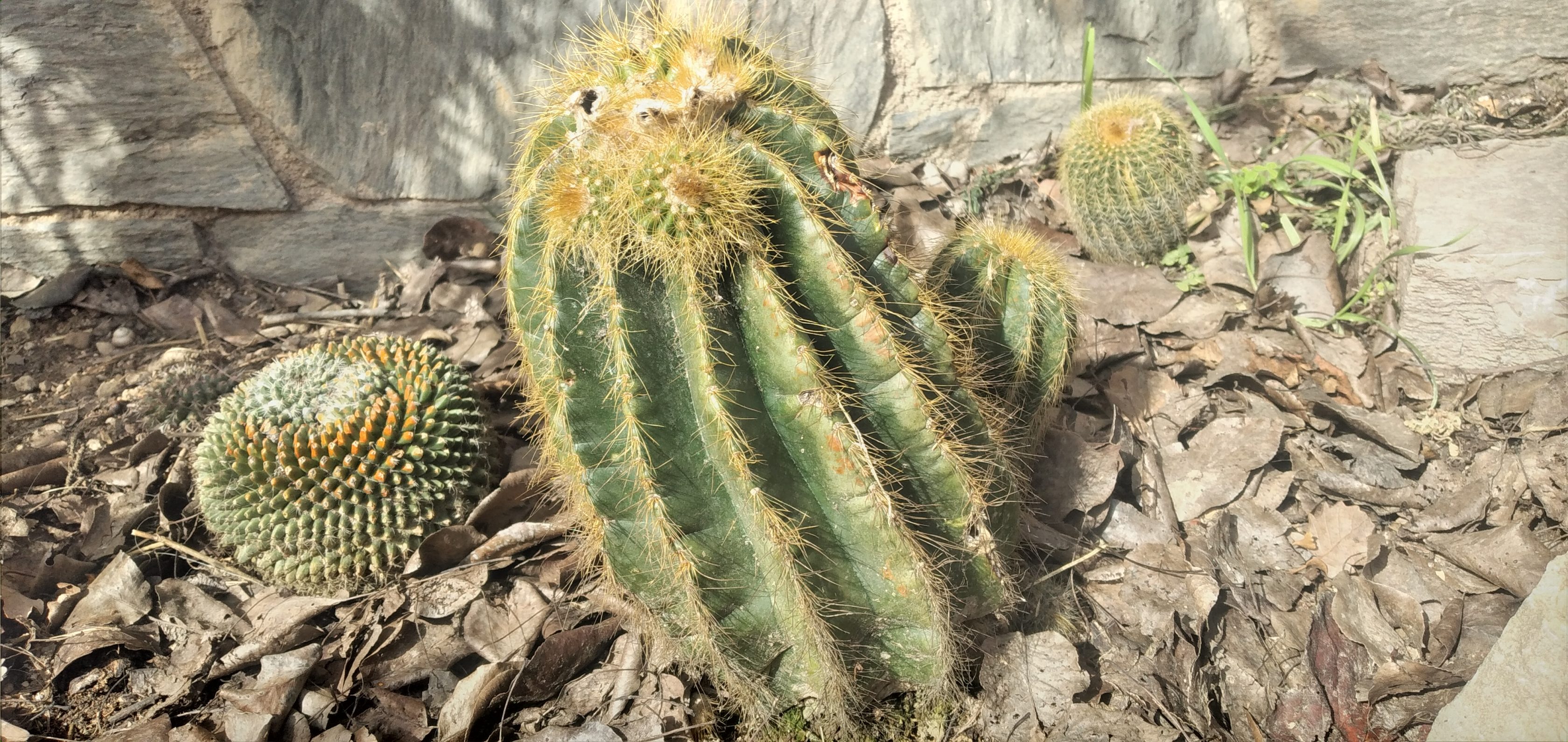
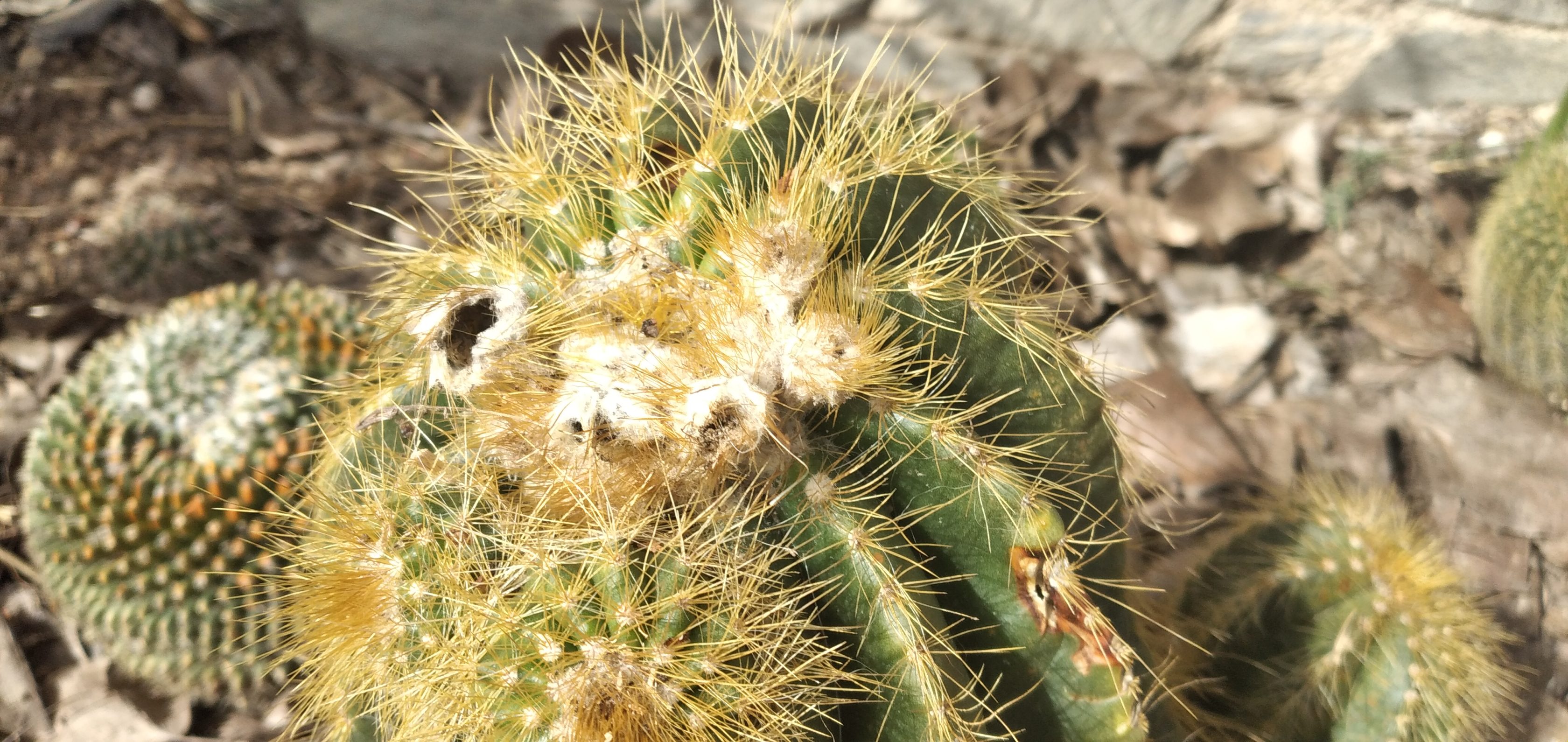
Today I present you with a cactus that is particularly delightful to me, because with this species it is with which everything started and I started my collection. But it wasn’t until a few years later that things went more seriously. Well, this is Parodia Magnifica, known by the synonymous scientific names of Notocactus Magnificus or Eriocactus Magnifica and it comes from Brazil.
They have a blue-green body, globular in shape when small and change to cylindrical over time. It can grow to a meter in height and tends to form large colonies with quite a considerable number of small specimens. It is one of the most marked ribs of cactus species, and the most clearly seen areoles and spikes from each of them. They have a wooliness that can be white or yellow and some spikes also yellow or white about one centimeter.
The flowering of this Parodia is among the most beautiful to date: it flowers on top of the very lively yellow cactus (petals are a bright yellow, while pistils are a darker yellow) and are considerably large, when fully open, can be five centimeters in diameter. It can bloom from late spring to midsummer if the weather accompanies.
It doesn’t like to be full of sunshine, prefers a semi-shadow environment, such as under trees (which is where I have it and it’s been under pearls for twelve years) or if you have it on the terrace, you better put it on a corner where the sun only touches it early in the day. In the central hours of the day, if you can, give it shade through a sunset if it is the case that you have to have it in a place where the sun touches all day. You have to bear this in mind, radiation can cause burns in the body of the cactus.
If they are small, they should not be exposed to temperatures below five positive degrees, but once they are big, they can hold frost up to three negative degrees as long as they are not very continuous. If this happens, you’d better provide him with protection either by putting him inside (if small) or by putting a cover above him (such as a greenhouse plastic or a black cloth because if he touches the sun holding the heat).
The irrigation must be moderated in the spring and summer, once every fortnight it is fine for you to remember that it must be in half shade. In autumn and winter, stop irrigating. In autumn at most it can be watered once a month, but I do not recommend it very much. In winter, irrigation must be completely suspended until the following spring. Before irrigating, as always, we will ensure that the land is completely dry.
Finally, they are quite resistant to pests and diseases, but we have to take into account attacks by aphids and cottony mealybug (the white cotton that once goes into the cactus is quite difficult to remove). This is almost only if you have it inside, and it usually appears if the irrigation is excessive and it is in a very badly ventilated area as well as fungus that can also come out.

Reviews
There are no reviews yet.