

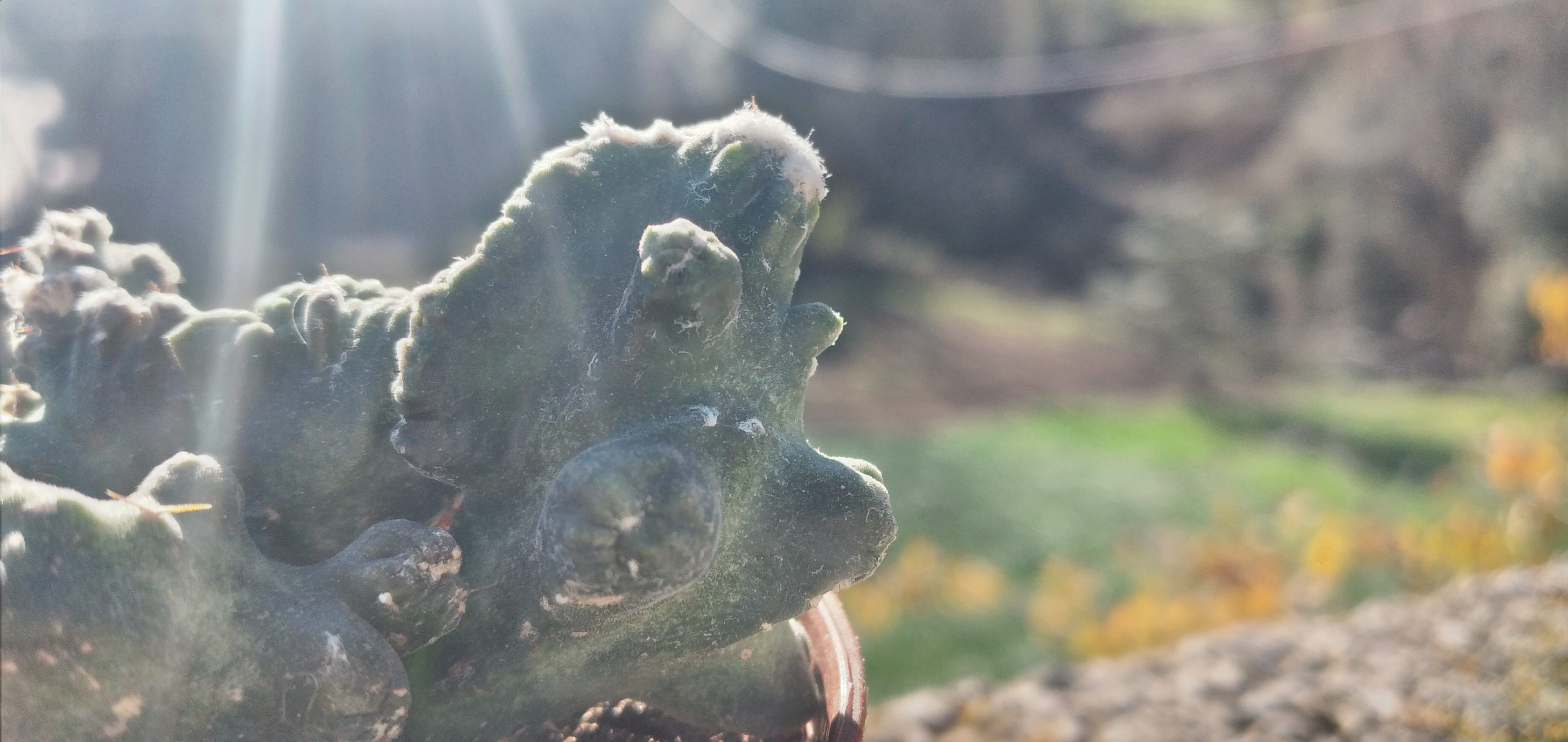
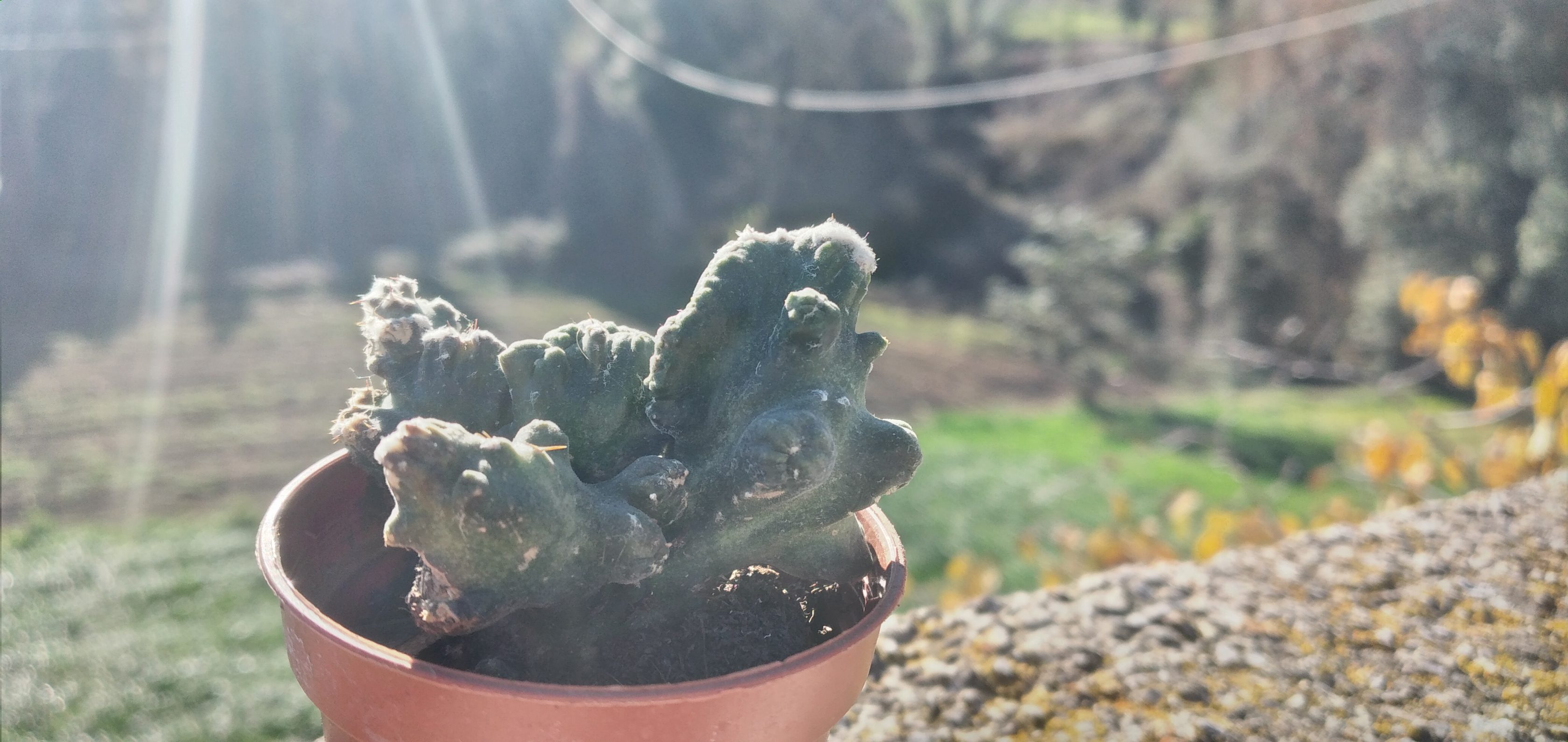
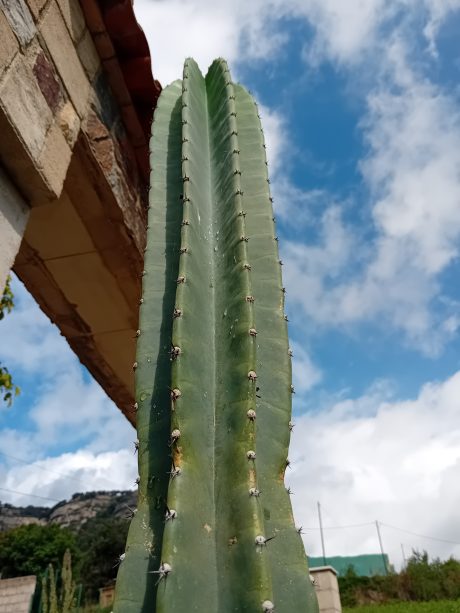
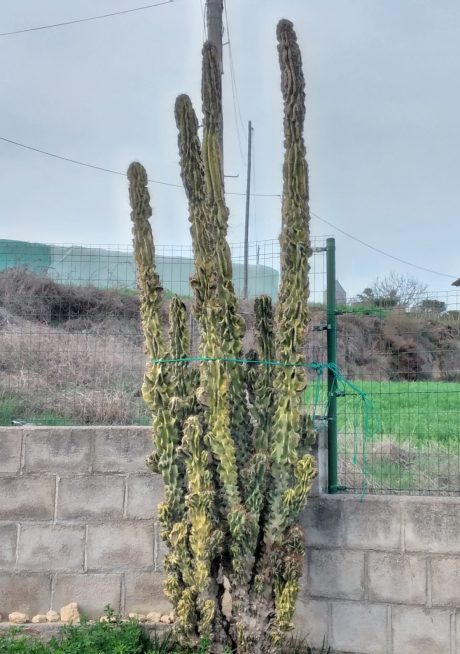
Cereus Spegazzinii or Monvillea spegazzinii, which is like its scientific synonym, originates from South America, but is found mostly in Argentina, Bolivia, Brazil and Paraguay. It is a relatively fast-growing, relatively straight-port cactus that branches off from about half the stem and can reach three meters in height.
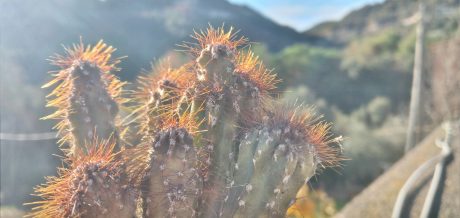
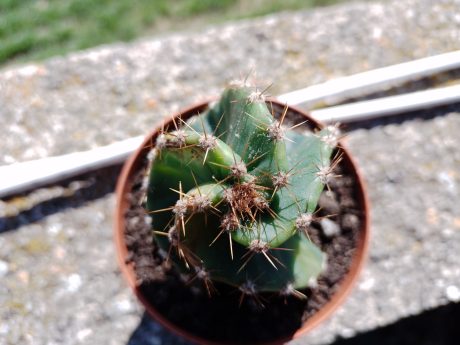
It has a very curious blue green body and highlights white lines running vertically from the tip to the base and is nothing other than areoles, which are white and woolly. But they’re not always so visible, sometimes they’re just tips that are located all over the surface. The spines are seen very little and there is no difference between the radial and central spines and what is not seen very much are the ribs, which normally have three to five.
Flowering occurs in the spring and gives us quite large flowers, about 13 centimeters long. They’re from a pink white that contrasts very well with the intense red color of their fruits, which will be the ones we can use to create new specimens thanks to the seeds we can extract once the fruit has dried.
It needs direct sunset exposure and a warm, dry climate is possible. It is not appropriate to expose it to minimum temperatures below four positive degrees, because these are, unfortunately, very sensitive specimens.
The time when we have to provide more water is spring and summer, and we will do so at the rate of: once every fortnight in spring, once a week in summer, and in autumn we will reduce water only once a month. We will stop irrigating when the minimum temperatures drop from the ten positive degrees. Between irrigation and irrigation, we will ensure that the substrate is completely dry.
Finally, it does not have many problems with pests or diseases, but we must ensure that we do not give it too much humidity by irrigation, in other words that we do not waste it too much and do not allow the soil to dry properly.
Reviews
There are no reviews yet.