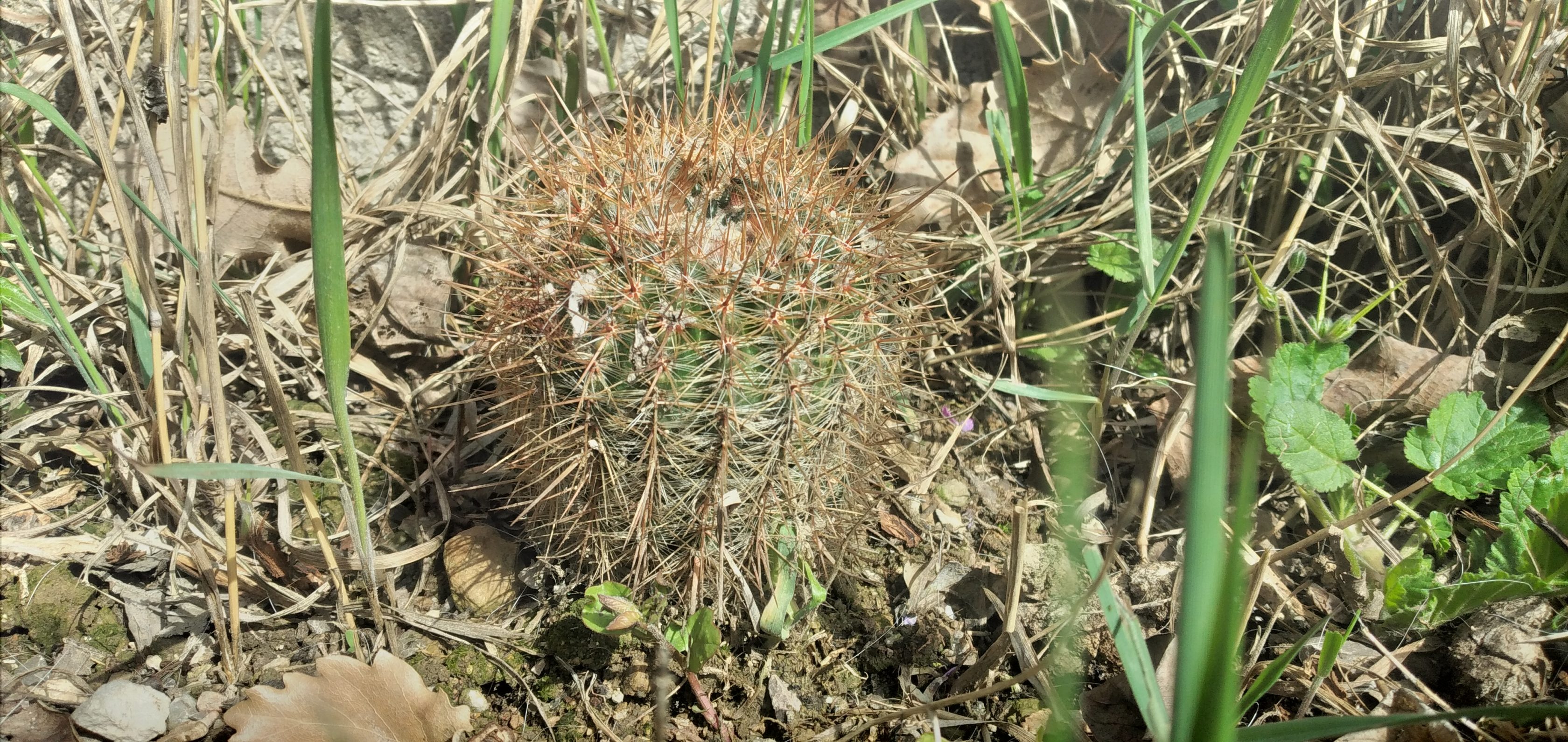
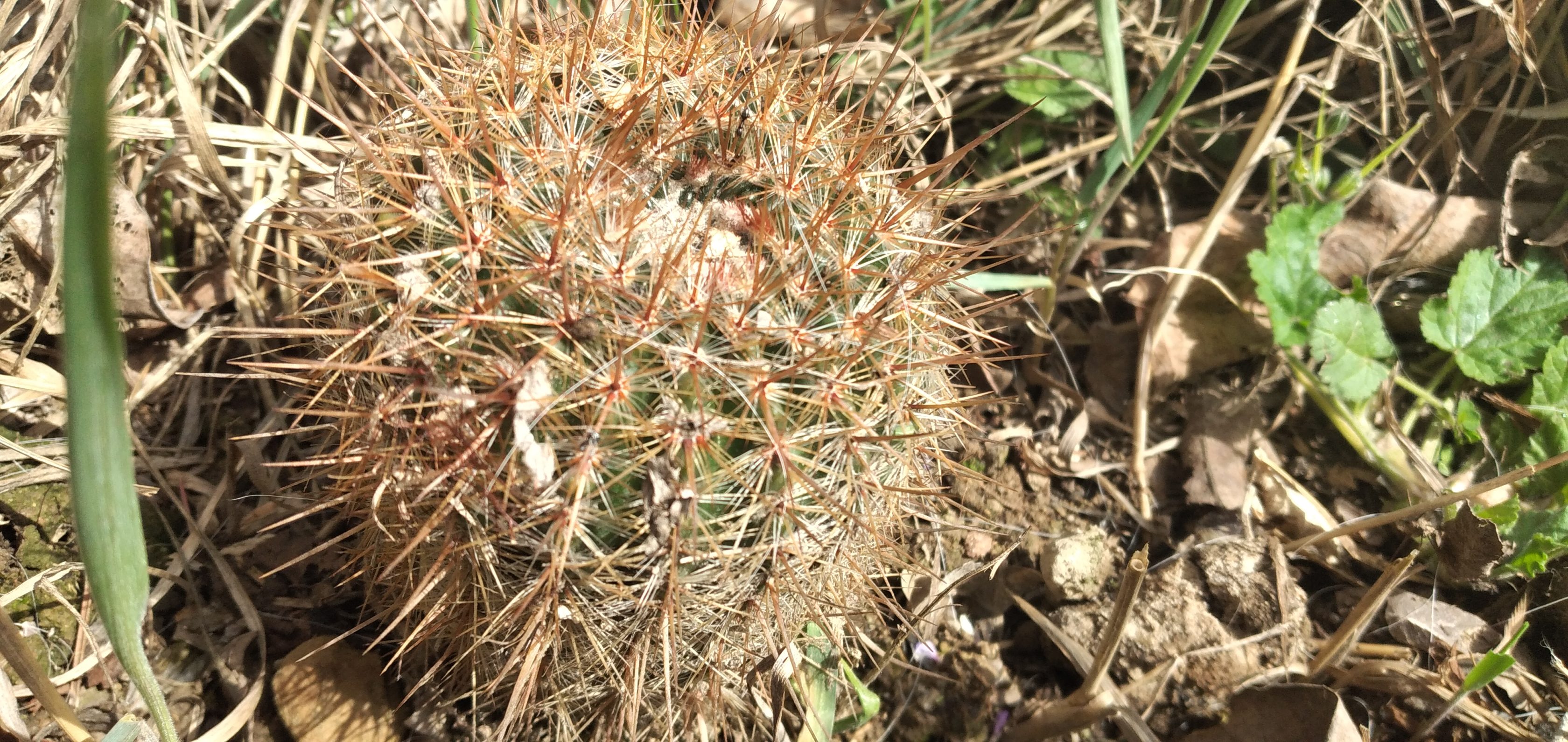
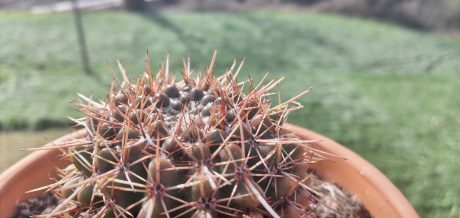
Today we are going to talk about Parodia rutilans, better known as Notocactus rutilants. Coming from Uruguay, this cactus is considered curious primarily by its derivation from Latin. The name “Rutilans” comes from “red orange”, and refers to the color of the spines that cover the whole body. It has numerous rigid and sharp spines with a variety of colors. It has between fourteen and sixteen radial spines between white and yellowish or grey and with darker tips up to five millimeters long. It also has one or two central spines, light reddish brown, straight or pointed slightly downwards, and we can also note that the lower is more robust. It can be up to seven millimeters in length.
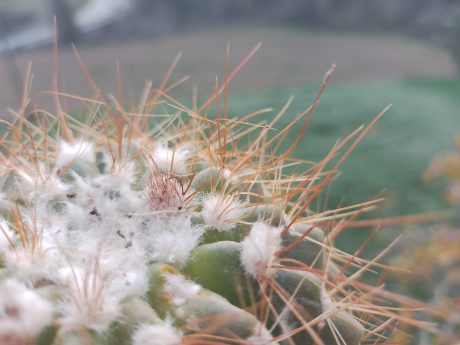
We can also see that, in their youth, areoles covering the spines are covered by a dense white wool, which is lost as it grows without disappearing altogether. It has some number of ribs if one considers the size of the cactus. Between eighteen and twenty-four in the form of a spiral and divided into deep grooves and small humps reminiscent of a person’s chin.
Its stem is globous when the cactus is small and with age becomes slightly elongated or cylindrical. Blue green is dull to bright green and does not exceed five centimeters in height.
Now is the time to talk about bloom. It produces very colorful salmon, pink or carmine red flowers and translucent petals that may also be salmon, carmine red to rusty yellow in the center. They are about five centimeters long by six centimeters in diameter, with white wool throughout the outer part of their neck. The flower tips are darker than the rest of the petals and the inside of the throat is a paler yellow. The stem is usually reddish brown. Compared to other species, it begins to flower when quite young. A characteristic point is that it is a very free and self-fertile flowering species (which means that it does not need another specimen of the same species or insects to create its own seeds). When the flower has already faded, the fruits appear that can be made between one and two centimeters long.
To conclude, I will explain the temperatures that should not be overcome, the most appropriate location and what may cause his death. Parodia Rutilans prefers to be located in a place where it has partial shade, likes to be in a warm and luminous place, but doesn’t like the intense and suffocating sun of the hottest months of summer.
The minimum temperature that should not be exposed during the rest period in winter, is between eight and ten positive degrees, although it has been shown to hold temperatures up to five negative degrees as long as they are short periods.
The irrigation must be more or less stable between spring and summer (once every fortnight in spring and summer), be practically null in autumn (at most once a month if you are in an area where the minimum temperatures do not exceed the aforementioned) and must be completely eliminated in winter, as roots rot and lose with great ease if the earth is wet and cold.
Finally, I would like to point out that it is better to irrigate them with rainwater.


Reviews
There are no reviews yet.